

Galvanized vs Copper Plumbing: What’s the Difference?
- Home
- Blog Details
If your Pennsylvania home was built before 1970, there is a reasonable chance it still has galvanized steel plumbing somewhere in the walls or underground. For decades, galvanized pipe was the standard choice for residential water supply lines. It was durable, widely available, and far better than the lead pipe it replaced. But galvanized steel has a fundamental flaw: it corrodes from the inside out. As zinc coating wears away over the decades, iron oxide builds up inside the pipe, restricting flow and eventually leaching rust into your water. By contrast, copper pipe resists corrosion, maintains full water pressure over its lifespan, and has been the preferred replacement material since the mid-twentieth century. Understanding the difference between these two systems helps homeowners make smarter decisions about plumbing inspections, renovation budgets, and when it is time to call a licensed plumber for a professional assessment.
How to Tell If You Have Galvanized or Copper Pipe
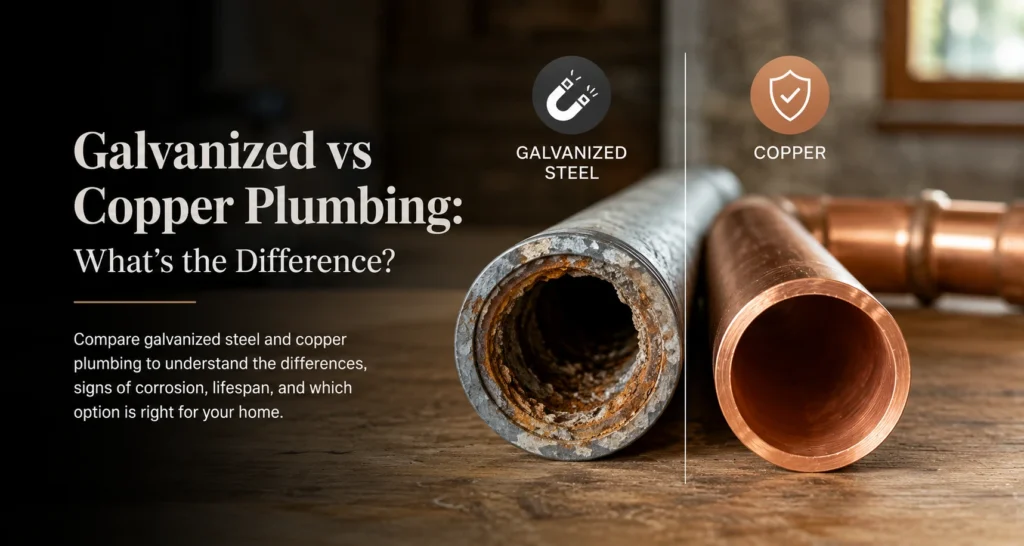
The easiest way to identify your pipe material is to look at exposed plumbing in the basement, utility room, or under sinks. Galvanized pipe has a dull gray or silver appearance, often with visible rust streaking or a rough, pitted texture on the exterior. It connects with threaded fittings and looks similar to iron pipe. Copper pipe is immediately recognizable by its reddish-orange or brown patina. It is lighter in weight, joins with smooth solder fittings or compression rings, and does not rust externally. If your pipes are white or gray plastic, you likely have PVC or PEX — modern materials used in renovations and new construction. When in doubt, a magnet test helps: galvanized steel is magnetic, copper is not. A licensed plumber can also use a pipe camera or pressure test to evaluate internal condition, which is more important than the exterior appearance for predicting remaining service life. A simple sound test can also help: tapping galvanized pipe produces a duller sound due to its steel core and zinc coating, while copper pipe produces a clearer, more metallic ring.
| Feature | Galvanized Steel | Copper |
|---|---|---|
| Typical Lifespan | 30–50 years (varies by water quality) | 50+ years |
| Corrosion Resistance | Low | High |
| Water Pressure | Decreases over time | Stable |
| Rust | Yes | No |
| Maintenance | Higher | Lower |
| Installation Cost | Lower historically | Higher |
| Common in Older Homes | Yes | Less common |
Why Older Pennsylvania Homes Still Have Galvanized Plumbing
Galvanized steel pipe was introduced as a safer alternative to lead plumbing in the late nineteenth century and remained the dominant residential pipe material throughout the first half of the twentieth century. Homes built across the Philadelphia Main Line, Montgomery County, and surrounding communities between 1900 and 1960 almost universally used galvanized supply lines. The zinc coating was intended to protect the steel from rust, and in theory it does — but only for so long. In most climates, galvanized pipe has a functional lifespan of forty to seventy years, meaning that even well-maintained systems installed in the 1950s and 1960s are now past or approaching the end of their expected life. Pennsylvania’s variable water chemistry and seasonal temperature swings accelerate wear. Many homeowners are unaware of what is behind their walls until they experience reduced water pressure, discolored water, or a plumbing emergency during a renovation project.
Why Galvanized Pipe Corrodes From the Inside
The zinc coating on galvanized pipe acts as a sacrificial layer, bonding with oxygen and water molecules before they can reach the underlying steel. Over time, the zinc depletes unevenly, leaving exposed sections of bare steel that begin to oxidize. Iron oxide — rust — accumulates on the inner wall of the pipe, narrowing the diameter and reducing flow. This process is gradual but self-reinforcing: rougher surfaces trap more minerals and sediment, accelerating buildup. In areas with hard water, calcium and magnesium deposits compound the problem, forming a mineral scale on top of the rust layer. The result is a pipe that may look structurally intact from the outside but is severely restricted or even partially blocked inside. Water discoloration, especially after the system sits unused overnight, is a classic indicator of active internal corrosion. At an advanced stage, pinhole leaks develop at the thinnest corroded points, often inside walls or beneath slabs where they go undetected for months.
Why Copper Became a Standard Replacement
Copper began displacing galvanized steel in residential plumbing during the 1950s and became the clear industry standard by the 1970s. Its adoption was driven by several practical advantages. Copper does not rust. The natural patina that forms on copper pipe — a thin layer of copper oxide — actually protects the metal rather than degrading it. Copper also carries no risk of internal scale buildup from corrosion byproducts, so it maintains full water pressure throughout its lifespan. A properly installed copper system typically lasts sixty to eighty years or more. Copper is also a smoother material than galvanized steel, which improves flow efficiency and reduces the energy demand on water heaters and pumps. For whole-home repiping projects, copper remains a premium choice that adds measurable value to a property. In Pennsylvania’s older housing stock, replacing galvanized with copper is one of the most impactful infrastructure upgrades a homeowner can make before or during a renovation.
Galvanized vs Copper vs PEX
Modern plumbing projects offer a third option beyond galvanized and copper: PEX (cross-linked polyethylene). PEX tubing is flexible, freeze-resistant, and significantly less expensive than copper on a per-foot basis. It has become the preferred material for new construction and large-scale repiping projects across much of the country. PEX does not corrode, requires fewer fittings, and can be run in long continuous lengths from a central manifold. However, PEX cannot be used outdoors or in UV-exposed areas, and some homeowners and municipalities have concerns about taste or chemical leaching in older formulations. For historic homes on the Main Line and in Philadelphia, copper often remains preferred because it integrates more cleanly with existing systems and is accepted without question by inspectors and future buyers. The best material for your home depends on water chemistry, local code, the scope of the project, and the recommendation of a licensed plumber who can assess your specific system.
Signs Your Galvanized Pipes May Need Attention
Galvanized plumbing rarely fails without warning. The most common early sign is reduced water pressure at fixtures that previously had strong flow — a symptom of internal buildup narrowing the pipe diameter. Discolored water, particularly a rusty brown or orange color when you first turn on a tap after a period of non-use, indicates active corrosion inside the supply lines. You may also notice a metallic taste or smell in your tap water. Visible rust staining around faucet aerators, in toilet tanks, or on white sinks and tubs points to iron leaching from the pipes. In more advanced cases, homeowners discover pinhole leaks inside walls, identifiable by water staining on drywall, musty odors, or unexplained spikes in water bills. If your home is approaching or past forty years old and you are planning a kitchen or bathroom renovation, a plumbing inspection before work begins can prevent costly surprises mid-project.
| Sign | What It Usually Means |
|---|---|
| Low or declining water pressure | Internal corrosion is narrowing pipe diameter |
| Rusty or discolored water | Zinc coating has worn through; steel is corroding |
| Water quality changes after periods of disuse | Sediment buildup from corrosion inside the pipe |
| Visible rust on exposed pipe exterior | Zinc coating has failed in that section |
| Frequent small leaks at joints | Threaded galvanized fittings corroding at connections |
| Metallic taste in water | Possible corrosion byproduct in water supply |
How Plumbers Identify Internal Pipe Corrosion
Visual inspection of exposed pipes gives a plumber initial information, but the interior condition of supply lines requires more specialized assessment. Experienced plumbers measure water pressure at multiple points in the system to identify flow restrictions consistent with internal buildup. A significant pressure drop from the main shutoff to individual fixtures often indicates narrowed pipe diameter from corrosion or scale. For a more definitive assessment, a plumber can insert a fiber-optic camera into the line through an access point to view internal conditions directly. This method reveals the extent of rust buildup, active corrosion zones, and any areas with compromised pipe walls. Water testing can also confirm elevated iron levels that correlate with galvanized pipe degradation. In homes undergoing pre-renovation inspections, a thorough plumbing assessment — including pressure testing and camera inspection where warranted — is the only reliable way to know whether your existing supply lines are fit for another twenty years or due for replacement before walls are closed up.
Should You Have Your Plumbing Inspected Before Renovating?
A pre-renovation plumbing inspection is one of the most valuable steps a homeowner can take before starting a kitchen, bathroom, or whole-home remodel. Opening walls and ceilings during a renovation exposes the existing plumbing infrastructure — and what is found can significantly affect project scope and cost. Discovering severely corroded galvanized supply lines mid-renovation forces a choice between a rushed emergency repipe or closing walls around compromised pipes that will need to be reopened again in a few years. Neither outcome is ideal. Scheduling a plumbing inspection before work begins gives you time to plan a repipe as part of the overall project, coordinate with your general contractor, and budget accurately. In Pennsylvania, licensed plumbers routinely perform pre-renovation assessments that include pressure testing, visual inspection of accessible lines, and camera inspection of lines inside walls or underground. The cost of this inspection is a fraction of the cost of reopening finished work.
Does Galvanized Plumbing Affect Home Value?
Yes — galvanized plumbing is a known factor in home appraisals and buyer negotiations in Pennsylvania’s real estate market. When a home inspection report identifies original galvanized supply lines in a home built before 1970, buyers routinely request either a price reduction or a plumbing credit to cover the cost of future replacement. In some cases, lenders financing older properties require plumbing upgrades as a condition of the loan. Appraisers are also trained to note plumbing material and condition as part of their assessment of a property’s overall quality and remaining useful life. A home with copper or PEX supply lines in good condition will generally appraise higher than a comparable home with original galvanized plumbing. For sellers planning to list an older Main Line or Philadelphia-area home, proactively replacing galvanized supply lines before listing can recover its cost in a stronger sale price and fewer contingencies during the negotiation process.
When Should Galvanized Pipes Be Replaced?
There is no single age threshold that makes galvanized pipe replacement mandatory, but most plumbers recommend proactive evaluation when a system is forty years or older. If your home still has its original galvanized supply lines from the 1950s, 1960s, or even 1970s, the internal condition is likely deteriorated enough to cause ongoing problems. Replacement becomes especially advisable before a major renovation. Opening walls for a kitchen remodel or bathroom addition without first addressing aging plumbing locks in those pipes for another decade or more. Scheduling a repiping project at the same time as a renovation reduces total labor cost and avoids the disruption of reopening finished walls later. If you are experiencing chronic low pressure, recurring pinhole leaks, or persistent water discoloration, those are clear indicators that the system is past its useful life regardless of age. A licensed Pennsylvania plumber can evaluate your specific system and recommend whether targeted repairs or full repiping is the appropriate course.
Should You Replace Galvanized Plumbing With Copper?
For most older Pennsylvania homes, replacing galvanized supply lines with copper is the recommended approach when a full repipe is warranted. Copper is a proven, long-lasting material that integrates reliably with existing fixtures and is well understood by inspectors, appraisers, and future buyers. A full copper repipe on an average-sized home typically takes two to four days and involves running new supply lines from the main shutoff through the home, replacing shutoff valves at fixtures, and restoring any walls or ceilings opened during the work. The cost varies based on home size, pipe routing complexity, and whether the drain-waste-vent system also needs attention. In some cases — particularly large-scale gut renovations or new additions — a plumber may recommend a hybrid approach using copper for the main trunk lines and PEX for branch lines to individual fixtures. Whatever the material, eliminating galvanized plumbing before closing up walls during a renovation is always the right sequence.
Key Takeaways
- Galvanized steel pipe corrodes from the inside out over time, reducing water pressure and contaminating water with iron.
- Most galvanized pipe systems in Pennsylvania homes have a functional lifespan of forty to seventy years — many are already past it.
- Copper pipe is the preferred replacement material, offering corrosion resistance and a lifespan of sixty or more years.
- PEX is a cost-effective modern alternative suitable for repiping projects, particularly in new construction or large renovations.
- Signs of galvanized pipe failure include reduced pressure, rust-colored water, metallic taste, and recurring pinhole leaks.
- Plumbing condition directly affects home value — buyers and inspectors in Pennsylvania flag galvanized systems as a deficiency, especially in older homes.
| If… | Consider… |
|---|---|
| Your home was built before 1960 and still has original plumbing | Having your system inspected for galvanized pipe |
| You are planning a bathroom or kitchen renovation | Replacing exposed galvanized sections during the project |
| You are seeing consistent low water pressure | Scheduling a plumbing inspection soon |
| You are preparing to sell your home | Addressing known galvanized plumbing proactively |
| Your galvanized pipe is in a low-moisture, low-use area | Monitoring may be reasonable short-term, but plan for eventual replacement |
Frequently Asked Questions
Galvanized steel pipe generally lasts 40 to 50 years before internal corrosion becomes significant enough to affect water pressure and flow.
They can coexist in a system, but galvanized and copper pipe shouldn't be directly connected without a dielectric fitting, since direct contact between the two metals can accelerate corrosion.
Internal corrosion narrows the pipe's interior diameter over time, restricting water flow even when there's no visible leak or damage.
This depends on the extent of corrosion and the age of the system. A licensed plumber can evaluate whether targeted repairs are sufficient or whether a full replumb makes more sense.
Yes, in some cases. As galvanized pipes corrode, they can affect water quality and taste. Older galvanized systems may also contain lead solder or fittings, which is another reason evaluation by a licensed plumber is recommended for older homes.
It can be, particularly since plumbing condition is a common item inspectors flag during a home sale. Replacing known problem plumbing proactively can prevent negotiations or delays during a sale.
Related Services
Share :